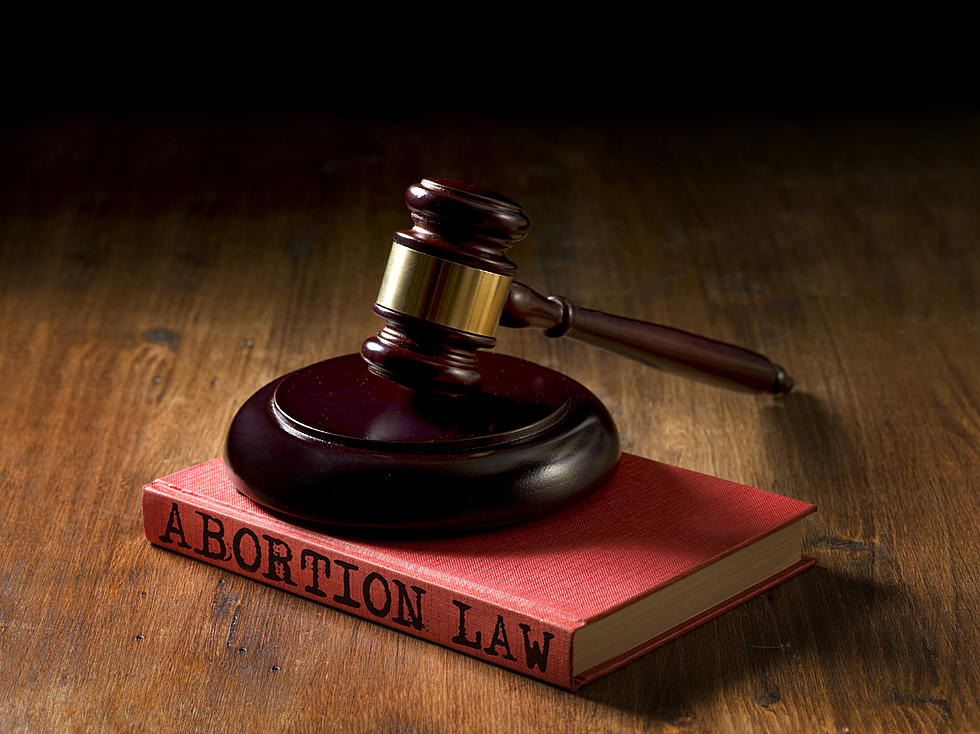
Explaining Wyoming’s Supreme Court Abortion Ruling
The state of Wyoming had a trigger law in effect that, should the U.S. Supreme Court ever strike down Roe versus Wade and send the decision back to the states, Wyoming would become pro-life, except in extreme cases like the life of the mother and/or child being in danger.
Roe V. Wade was struck down by the high court because, first of all, the court was not allowed to write law. Second, the Constitution does not give the Federal Government power over such issues. These decisions are to be left up to each state.
The trigger law in Wyoming was declared unconstitutional because of a line in the Wyoming state constitution that makes healthcare decisions an individual choice. So the Wyoming high court ruled in a 4-1 decision.
The Wyoming Constitution, specifically Article 1, Section 38 (added in 2012), grants competent adults the fundamental right to make their own healthcare decisions, obligating the state to protect this from "undue governmental infringement."
But we are left with the question of when abortion might be considered "healthcare."

If the life of the mother and/or child is at risk, then we could call it a healthcare issue. But what if this is an abortion for convenience's sake? Let's say that the mother simply does not want a child at this time. Then it would not be a healthcare issue.
To reconcile these issues, members of the Wyoming House and Senate are looking at a way to change the Wyoming Constitution. Not to take away the clause on individual healthcare, but to allow for their orgional ban on abortion for convenience's sake.
Changing the Wyoming constitution is a long and difficult process. But it is supposed to be.

To change the Wyoming Constitution, a proposed amendment must first pass the legislature with a two-thirds vote in both the House and Senate, then be placed on the general election ballot, and finally be ratified by a majority of voters statewide and in at least three-fourths of the counties, making it a difficult process requiring broad political and public support. Citizens cannot directly initiate constitutional amendments, but can pass statutes or veto laws through initiative and referendum.
Legislators could also write an abortion law that clearly defines when an abortion is a matter of health and makes it illegal when it is for convenience's sake.
The debate over abortion in Wyoming is not settled. What we finally decide, as a state, might take a few more years.
Exploring The Lost Town Of Yoder Wyoming
Gallery Credit: Glenn Woods
Jay Em, Wyoming, Frozen In Time
Gallery Credit: Glenn Woods
More From My Country 95.5