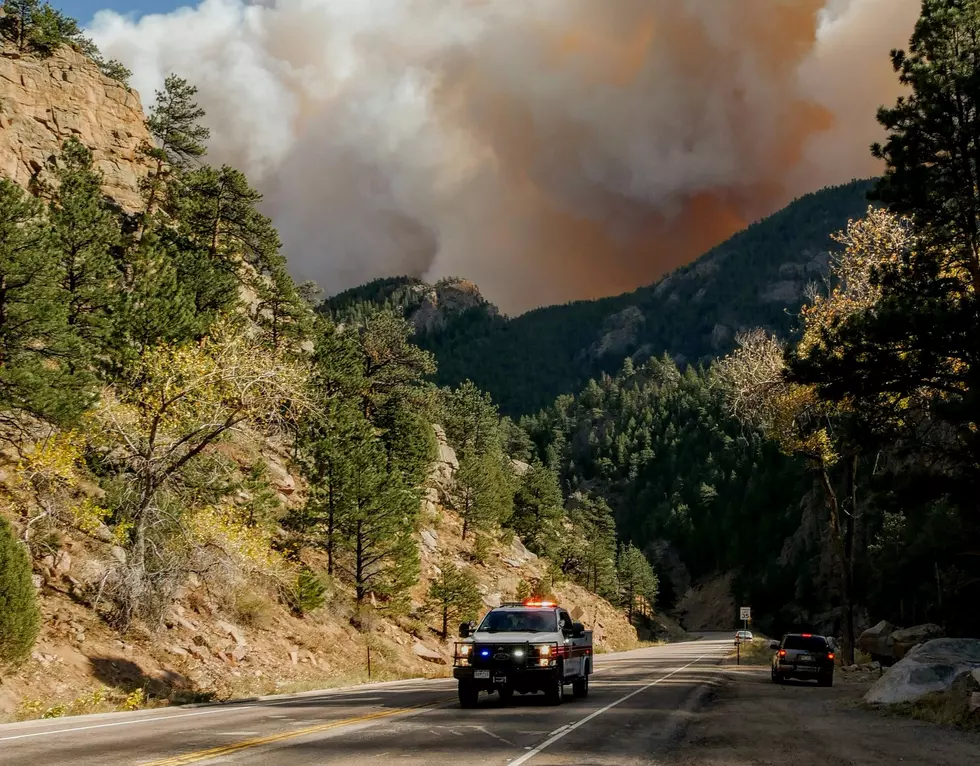

Stage One Fire Restrictions In Effect In Natrona County
The thought of battling a wildfire is certainly worrisome and is enough to keep you awake at night. 2026 has already been warm and dry, with fires causing concern. Natrona County has implemented Stage One Fire Restrictions, which means that open fires and fireworks aren't allowed at this time.
There are some exceptions:
- Campfires at campsites or at home with a fire ring.
- Trash or refuse burned in proper containers from 6 p.m. to 8 a.m.
- Charcoal grills
- Cutting torches, welders, or grinders
- Portable stoves
- Just added: cleaning out the Casper-Alcova Irrigation District canals and other irrigation ditches for maintenance before seasonal use, as long as you have written approval from the Natrona County Fire District and Fire Marshall.
In all of these cases, it's required that at least 15 feet around the fire source be cleared of materials that could spread fire. Also, remember that just because you can, doesn't mean you should. If conditions aren't right, a small ember can cause a horrific fire.
Remember that 85% of wildfires in the U.S. are caused by humans and can be prevented if you use caution and common sense. Something as simple as parking your hot car in dry grass, letting the chains on your trailer drag on the pavement, or flicking a cigarette out the window can ignite a fire
Use caution, pay attention to fire restrictions, and keep your property prepared for a potential fire. This graphic from the National Fire Protection Association shows the three major zones around your property you need to keep in mind when preparing.
- RED: Immediate Zone
- Clean roofs and gutters of dead leaves, debris, and pine needles that could catch embers.
- Replace or repair any loose or missing shingles or roof tiles to prevent ember penetration.
- Reduce embers that could pass through vents in the eaves by installing 1/8 inch metal mesh screening.
- Clean debris from exterior attic vents and install 1/8 inch metal mesh screening to reduce embers
- Repair or replace damaged or loose window screens and any broken windows. Screen or box-in areas below patios and decks with wire mesh to prevent debris and combustible materials from accumulating.
- Move any flammable material away from wall exteriors – mulch, flammable plants, leaves and needles, firewood piles – anything that can burn. Remove anything stored underneath decks or porches.
- ORANGE: Intermediate Zone
- Clear vegetation beneath large, stationary propane tanks.
- Create fuel breaks with driveways, walkways/paths, patios, and decks.
- Keep lawns and native grasses mowed to a height of four inches.
- Remove ladder fuels (vegetation under trees) so a surface fire cannot reach the crowns.
- Prune trees up to six to ten feet from the ground; for shorter trees, do not exceed 1/3 of the overall tree height.
- Space trees to have a minimum of eighteen feet between crowns, with the distance increasing with the percentage of slope.
- Tree placement should be planned to ensure the mature canopy is no closer than ten feet to the edge of the structure.
- Tree and shrubs in this zone should be limited to small clusters of a few each to break up the continuity of the vegetation across the landscape
- GREEN: Extended Zone
- Dispose of heavy accumulations of ground litter/debris.
- Remove dead plant and tree material.
- Remove small conifers growing between mature trees.
- Remove vegetation adjacent to storage sheds or other outbuildings within this area.
- Trees 30 to 60 feet from the home should have at least 12 feet between canopy tops.*
- Trees 60 to 100 feet from the home should have at least 6 feet between the canopy tops.*

Ways For YOU To Help Prevent Wyoming Wildfires
Gallery Credit: Drew Kirby, Townsquare Media
Yellowstone Wildfire of 1988
More From My Country 95.5